Home › Road, Street, and Municipal Paving
Keep traffic moving smoothly with professional road paving in Houston, TX. We construct and resurface neighborhood streets, municipal roads, and private routes with sound base work, proper compaction, and asphalt thickness designed for traffic loads.
Precision Asphalt Houston provides professional road paving throughout Houston, TX, Texas and the surrounding area. Our licensed, insured crew delivers safe, clean, on-time work with a free estimate before anything begins. Call (346) 523-8307 or request your free quote.
Road paving in Houston that’s built for real traffic and real heat
Road, street, and municipal paving in Houston is not a one-size-fits-all job. At Precision Asphalt Houston, we start every project by walking the site with you, reviewing plans, and looking closely at how the road will actually be used. A residential cul-de-sac off FM 1960 has very different needs than a busy cut-through street serving box trucks near the Beltway. We document current pavement conditions, drainage patterns, and any problem spots like rutting, ponding water, or cracking along utilities.
From there, we match the pavement design to expected traffic load, soil conditions, and your budget. For example, a neighborhood street that only sees light cars may work well with a 2 to 3 inch surface over a stabilized base. A city connector carrying Metro buses or garbage trucks will need thicker asphalt lifts, a stronger base, and tighter compaction standards. We also consider Houston’s heat and heavy rainfall. Mix designs and slope must account for both, so the road does not rut in summer or hold water during storms.
Our team coordinates early with you and, when needed, with the City of Houston Public Works or Harris County Engineering. If you are working on a public or quasi-public project, we review any available plans and details, including required section depths, base specs, and ADA-related transitions at intersections. For HOAs or private road owners, we can help you decide whether to follow city standards, light commercial specs, or a custom section that balances cost and life expectancy.
How road and municipal paving actually gets built, step by step
Successful road paving in Houston starts under the surface. After clearing and grubbing, we evaluate existing subgrade conditions. In many parts of Houston, especially areas with clay soils, we recommend subgrade improvement with lime or cement stabilization to reduce movement and improve support. If the subgrade pumps or deflects when compacted, we correct that before we ever place base rock.
Next comes base installation. We typically use crushed limestone or recycled concrete base compacted in multiple lifts to meet the specified thickness and density. Depending on local requirements, this might be 6 inches for light residential streets or 8 to 10 inches or more for heavily loaded roadways. We check grade with stringlines or laser and verify cross slope so water will move to inlets or ditches, not sit on the finished pavement.
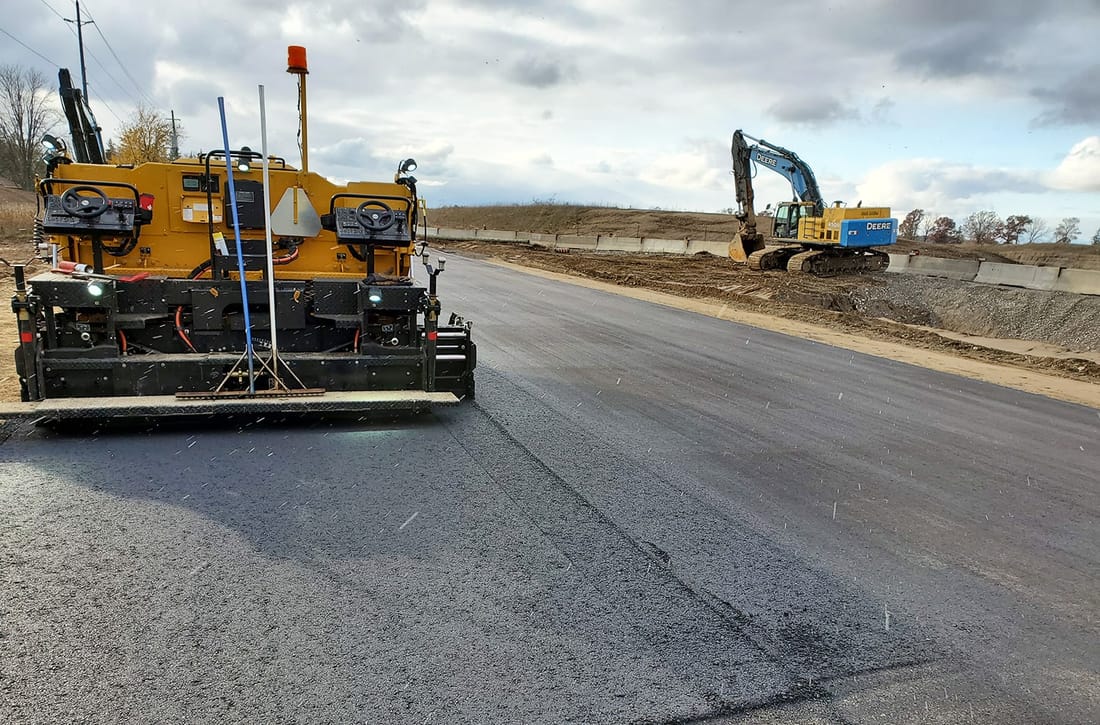
When it is time to pave, we bring in commercial asphalt pavers, not small patch machines. Precision Asphalt Houston schedules asphalt deliveries from local Houston plants to keep materials hot and consistent. We usually place a binder course first when required, then a surface course, each between about 1.5 and 2.5 inches thick. Steel drum and pneumatic rollers follow directly behind the paver for proper compaction.
Transitions at tie-in points are critical. Where a new road connects to an existing city street or driveway, we mill or saw-cut the existing asphalt, create a tapered transition, and make sure drainage is preserved. At intersections and crosswalks, we coordinate with any required ADA curb ramps and tactile warning surfaces so final grades meet code. We finish by checking joints, edges, and manhole or valve covers for proper elevation and smoothness.
Design choices, asphalt mixes, and what drives the cost
Road paving cost in Houston is driven by three main factors: structure thickness, site conditions, and project logistics. Structure thickness is the combined depth of base and asphalt. Heavier traffic and weaker soils require more structure, which increases both material and labor costs. We help you decide what is truly necessary so you do not pay for extra thickness where it is not needed, or underbuild and face premature failures.
Site conditions can be a wild card. Poor drainage, existing pavement failures, buried utilities close to the surface, or very soft subgrade will increase preparation work. In some older neighborhoods inside the Loop, for example, we have to work carefully around shallow utilities and old base materials that do not meet modern standards. On newer developments out toward Katy or Spring, the subgrade is often cleaner but may need moisture conditioning due to expansive clays.
You also have mix and surface options. For many municipal and neighborhood streets, a standard TXDOT-approved hot mix works well. On routes with slower traffic and a lot of stopping, like school zones, we may recommend mixes that resist rutting and shoving. For areas that need better night visibility or lower noise, we can discuss finer graded surfaces or chip seal overlays in combination with asphalt.
Logistics affect cost too. Working at night to avoid traffic, phasing the work to keep access to homes or businesses, and dealing with tight work windows from the city all influence pricing. Precision Asphalt Houston is upfront about these drivers so you understand where every major dollar goes and what options you have to control budget without sacrificing performance.
Local permitting, inspections, and coordination in the Houston area
Road paving that ties into public streets or sits within a city or county right of way usually requires coordination with local agencies. In Houston, that often means the City of Houston Public Works Department, Harris County, or nearby municipalities like Pasadena, Pearland, or Sugar Land. If your project is part of a public bid, the plans will typically reference City of Houston or TXDOT standards. We read those carefully and build to the specific details required.
For private streets in gated communities or commercial parks, you may still face reviews from HOAs or management districts. We can help you prepare basic drawings and pavement sections that HOAs understand, including base depth, asphalt thickness, and striping layouts. If the project impacts existing drainage swales, inlets, or detention ponds, we recommend involving your engineer to confirm that changes to grades will not violate any local drainage criteria.
Inspections are another key piece. On many projects, the city or county wants to see proof of compaction, base depth, and asphalt thickness. Precision Asphalt Houston coordinates density testing when required and keeps daily reports so you have documentation if questions come up later. We also schedule inspections so they do not become a bottleneck that leaves open lanes or exposed base longer than necessary.
Traffic control planning is critical on streets that stay open to the public. We can follow TXDOT traffic control standards and, when needed, help you secure lane closure approvals. That might include temporary signs, flaggers, pilot cars for short work zones, and staged paving so at least one lane remains open. For school areas and busy intersections, we typically recommend working during off-peak hours to keep disruption to a minimum.
Protecting your new pavement and solving common Houston road problems
Once the new road or street is paved, the first 24 to 48 hours matter a lot. We control access during this period so the asphalt can cool and gain strength. On neighborhood streets, we often phase work so residents always have a way in and out, even while limiting heavy trucks until the pavement is ready. For municipal roads, we coordinate opening times with your inspectors and emergency services so everyone knows when lanes will be back in service.
Common Houston road problems include reflective cracking from old pavement below, rutting in wheel paths, and edge failures along shoulders or ditches. To reduce reflective cracking, we may recommend milling off enough of the old asphalt, using a leveling course, or in some cases installing a geotextile fabric between layers. To fight rutting, we focus on base quality and compaction, then choose appropriate mix designs for the traffic and heat. Edge failures are addressed by providing enough base width, shaping shoulders correctly, and maintaining proper drainage.
We also talk with owners about a maintenance plan before we leave the site. That usually includes timely crack sealing, keeping drainage inlets clear, addressing oil spots or fuel spills on bus or truck routes, and planning for a sealcoat or overlay at appropriate intervals. For HOAs and private road owners, we can provide a simple pavement inventory and condition summary so you can budget for work over 5 to 10 years instead of reacting only when a street fails.
With Precision Asphalt Houston, you get a paving partner that understands how Houston’s weather, soils, and regulations come together on real streets, not just in a design manual. Our goal is to build roads, streets, and municipal pavements that ride smoothly, drain properly, and hold up under the actual traffic you see every day.