Home › Commercial Asphalt Resurfacing & Overlays
Renew tired commercial pavement with commercial asphalt resurfacing in Houston, TX. We repair failures, mill high spots, and install overlays that restore smooth driving surfaces for parking lots, private roads, and drive lanes while saving compared to full reconstruction.
Precision Asphalt Houston provides professional commercial asphalt resurfacing throughout Houston, TX, Texas and the surrounding area. Our licensed, insured crew delivers safe, clean, on-time work with a free estimate before anything begins. Call (346) 523-8307 or request your free quote.
Commercial Asphalt Resurfacing That Handles Houston Traffic And Heat
Commercial asphalt resurfacing is often the most cost-effective way to restore a worn parking lot or drive lane without tearing everything out. At Precision Asphalt Houston, we focus on evaluating whether your existing base can be saved, then installing a new asphalt overlay that stands up to Houston traffic loads, sun, and sudden storms.
For retail centers, office parks, industrial yards, and HOA streets around Houston, resurfacing can correct moderate cracking, ruts, and surface fatigue while avoiding the cost and disruption of full reconstruction. We look closely at your traffic patterns, truck loading zones, drainage, and previous repairs, then design a resurfacing plan instead of applying a one-thickness-fits-all overlay. This approach gives you more life from your pavement and lets you plan capital spending in stages instead of as one large replacement project.
Site Evaluation: How We Decide If Resurfacing Is Right For You
Before we recommend commercial asphalt resurfacing, we complete a structured evaluation of your pavement. Our crew walks the site, marks out structural failures, maps drainage issues, and checks for base movement or pumping. In Houston, black clay soils and poor drainage can destroy a thin overlay in a few years if underlying problems are ignored.
We look for alligator cracking that indicates base failure, isolated potholes that can be patched, rutting in wheel paths, and reflective cracks from old joints. We also review where trucks turn, queue, and load, since those zones may need deeper repairs or thicker overlays than car parking areas. If we see signs that the base is saturated or unstable, we will recommend full-depth repair in those areas instead of resurfacing.
You will receive a clear explanation of where resurfacing alone is appropriate and where dig-outs or undercutting are required. This level of upfront planning is what allows a commercial asphalt overlay to last in Houston, instead of simply hiding problems for a short time.
Step-by-Step Process For Commercial Asphalt Resurfacing & Overlays
A successful overlay is all about surface preparation and transitions. For commercial properties in Houston, we normally follow a defined sequence so your site is disrupted for as little time as possible.
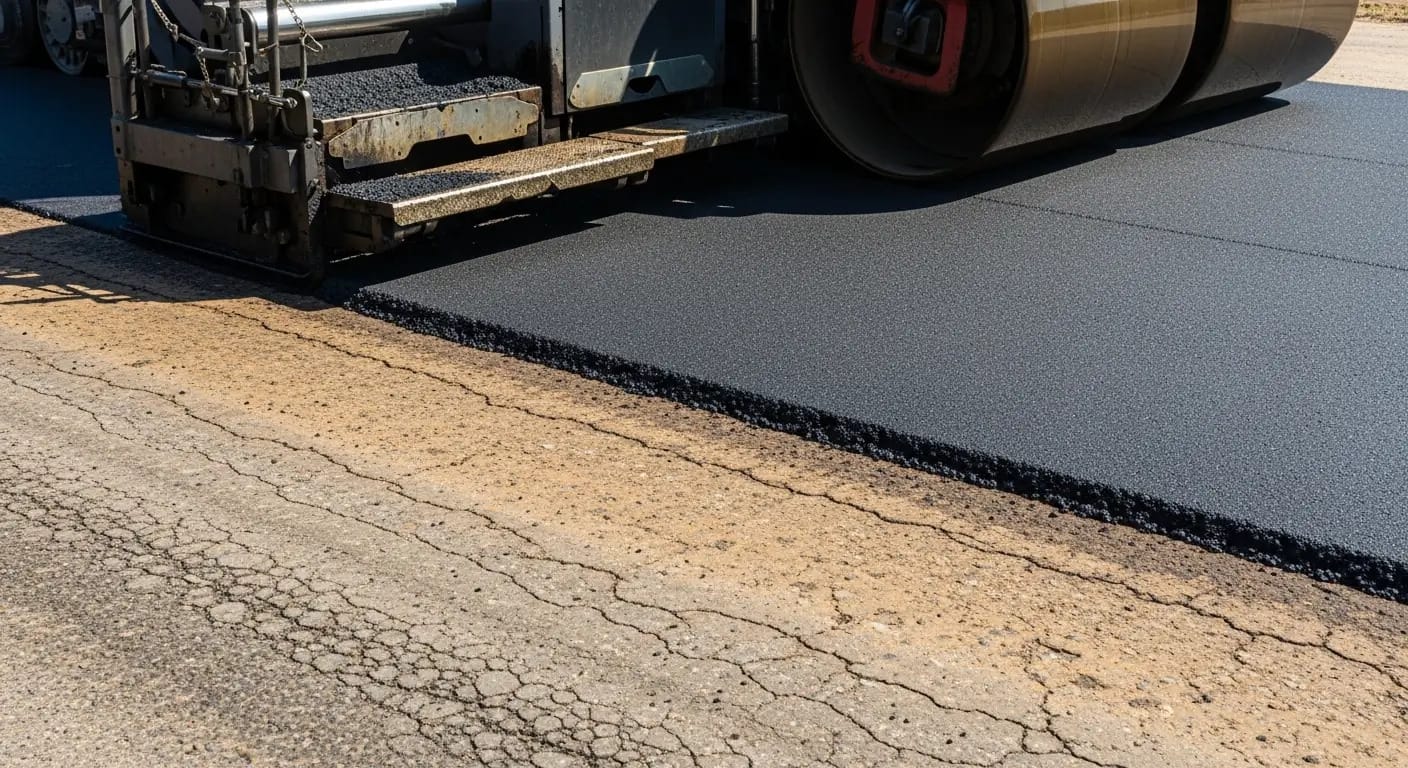
First, we mill or grind high spots, existing overlays, and failed areas to remove loose material and create a stable surface. Around drains, entrances, and concrete gutters, we typically mill deeper to maintain proper elevations and avoid trip lips where old pavement meets new.
Next, we perform full-depth repairs where the base has failed. This may include removing asphalt and a portion of the base, adding stabilized base material, then compacting in controlled lifts. For loading docks and dumpster pads, we often recommend thicker asphalt or concrete inlays to handle repeated point loads.
Once the surface is sound, we clean it thoroughly and apply a tack coat. This bonding layer is often skipped by low-cost contractors, but in Houston heat and heavy rain it is essential to prevent delamination between old and new asphalt.
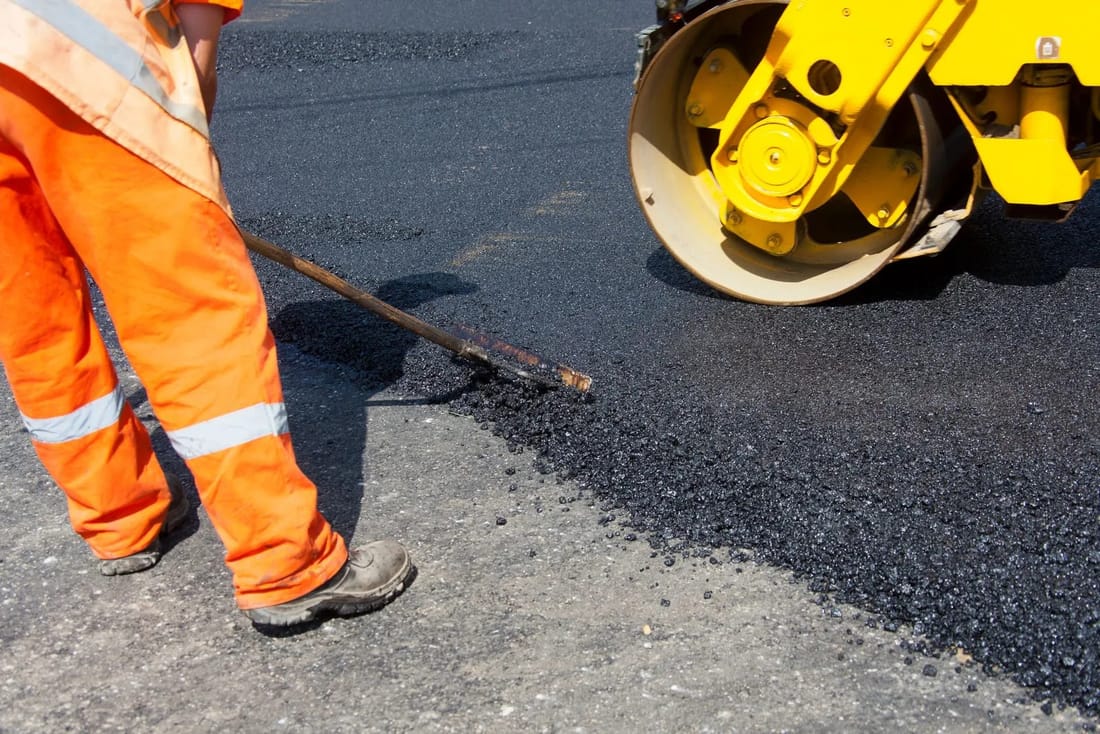
We then install the asphalt overlay itself, typically in 1.5 to 2.5 inch lifts for commercial parking lots, and sometimes thicker in drive lanes and truck routes. Our pavers use automatic grade controls to maintain slopes so water runs to inlets, not toward doors or low spots. Finally, we compact the new surface using a combination of steel drum and pneumatic rollers, adjusting passes based on temperature and mix type so the mat is dense and smooth when it cools.
Material Choices And Mix Designs For Houston Conditions
Not all asphalt mixes behave the same under Gulf Coast conditions. Precision Asphalt Houston works with local suppliers to select mixes that fit your site use and budget. For most commercial asphalt resurfacing projects, we use hot mix asphalt designed to handle high surface temperatures and heavy thunderstorms without flushing or raveling.
In high traffic or truck areas, we often specify a denser, higher stone content surface mix to resist rutting. For general parking areas with mostly passenger vehicles, a standard commercial mix is usually sufficient and more economical. If your schedule requires nighttime paving, we adjust the mix and rolling approach so compaction is complete before the mat cools.
We also consider compatibility with any future seal coating or striping plans. A very open-graded or coarse surface may offer good traction but can require more sealer to achieve an even look later. During planning, we will walk you through tradeoffs in smoothness, skid resistance, and long-term maintenance so you can make an informed choice instead of being sold a generic mix that is not tailored to Houston conditions.
Cost Drivers: What Impacts The Price Of A Commercial Asphalt Overlay
Two lots of the same size can have very different resurfacing costs. The primary drivers are the condition of the existing pavement and base, how much milling or demolition is needed, the overlay thickness, and how complex the layout is.
Properties in older parts of Houston often have multiple layers of patchwork from previous repairs. Tying these old patches together may require extra milling or leveling courses before the final overlay. Lots with poor drainage may need adjustments to slopes or new inlets, which adds concrete and grading work.
Traffic management is another factor. If your site must stay partially open, we phase the job, set up signage, and possibly work nights or weekends. This can cost more than closing the lot entirely for one mobilization, but it may be the right choice for retail and healthcare clients.
Our proposals from Precision Asphalt Houston break out milling, patching, overlay tonnage, striping, and incidentals. That way you can see where your money is going and which items are optional upgrades, such as thicker lifts in truck lanes or fabric interlayers over cracked areas.
Common Problems And How We Prevent Them
In Houston, the most common failures on poorly planned overlays are reflective cracking, ponding water, and ruts in wheel paths. We address each of these directly during design and installation.
Reflective cracking occurs when cracks in the old pavement move and transmit through the new layer. Where cracking is moderate but the base is stable, we may saw and seal key cracks, install stress-absorbing membrane interlayers, or increase the overlay thickness in those areas to slow reflection.
Ponding typically comes from inadequate slope or settled base near inlets. Before paving, we shoot grades and mark low spots. During milling, we remove material strategically so that the new overlay can restore positive drainage. This step is especially important in Houston, where sudden heavy rain can reveal even small grading mistakes.
Rutting is controlled by repairing unstable base and specifying the right mix and thickness. In loading zones for delivery trucks, trash trucks, or container yards, we design for actual expected loads, not just nominal parking lot use. We also monitor pavement temperatures during paving so compaction is performed within optimal temperature windows, which helps resist later deformation.
What To Expect During And After Your Resurfacing Project
For most commercial asphalt resurfacing jobs, work is completed in one to three days, depending on size, complexity, and phasing. Before we start, Precision Asphalt Houston will plan traffic control with you, coordinate with tenants if needed, and schedule around peak business hours where possible.
During the project you can expect some noise from milling machines and rollers, along with temporary closures of sections of your lot. We place clear signage and cones, and we use flaggers when traffic patterns are complex. Safety for your customers and employees is always a top priority.
After paving, light vehicle traffic can typically return within 24 hours and heavy trucks after 48 to 72 hours, depending on weather and mix type. We provide you with simple guidelines for early-life care, such as avoiding tight turning of heavy vehicles while the pavement is still curing.
We also discuss your long-term maintenance plan. In Houston, periodic seal coating, crack sealing, and prompt repair of oil-damaged spots can extend the life of your overlay significantly. Our team can set up a maintenance calendar so you are not guessing when to intervene, and so your resurfaced pavement continues to perform and look professional for many years.