Home › Commercial Gravel-to-Asphalt Conversions
Upgrade dusty, muddy surfaces with commercial gravel to asphalt conversions in Houston, TX. We rebuild bases where needed and pave clean, durable asphalt lots and access roads for businesses, churches, and facilities.
Precision Asphalt Houston provides professional commercial gravel to asphalt throughout Houston, TX, Texas and the surrounding area. Our licensed, insured crew delivers safe, clean, on-time work with a free estimate before anything begins. Call (346) 523-8307 or request your free quote.
Commercial Gravel-to-Asphalt Conversions in Houston, Built for Heavy Use
If you are tired of dust, potholes, and constant grading on your commercial gravel lot, Precision Asphalt Houston specializes in turning rough rock into smooth, durable asphalt surfaces that stand up to Houston traffic and weather. Our commercial gravel to asphalt service is built specifically for properties that get real use, like warehouses, equipment yards, churches, small shopping centers, and industrial sites.
A proper conversion is not just throwing asphalt over rock. We evaluate the gravel base you already have, how trucks and cars move across it, and where water collects. From there we decide how much of the existing material we can reuse, where we need to cut and undercut, and what kind of asphalt mix and thickness your property really needs. Done right, this turns an ongoing maintenance headache into a predictable, long-lasting surface.
We work across the Houston area, including the Ship Channel industrial corridor, north and northwest distribution hubs, and small business sites in and around the loop. Our crews are used to working around active operations, keeping access open for deliveries and employees while the conversion is underway.
How a Gravel Lot Becomes a Finished Asphalt Surface
Commercial gravel to asphalt conversions follow a series of specific steps, each one affecting how long your new pavement will last.
1) Site evaluation and drainage check. We walk the site with you and look at how the current gravel behaves after rain. In Houston, poorly drained gravel turns into ruts and mud quickly. We check for soft spots, standing water, and low areas around entrances, dumpster pads, and loading zones.
2) Grading and base correction. Most gravel lots were never graded carefully. We reshape the surface to create a consistent slope toward ditches, drains, or swales. In soft or pumping areas, we undercut the existing gravel, haul out unstable material, and bring in new crushed base rock that compacts properly.
3) Base compaction and proof rolling. Once grading is done, we compact with vibratory rollers. On heavier-use sites, we proof roll with a loaded truck to spot weak areas. Any areas that deflect get cut out and rebuilt so they do not turn into potholes under your new asphalt.
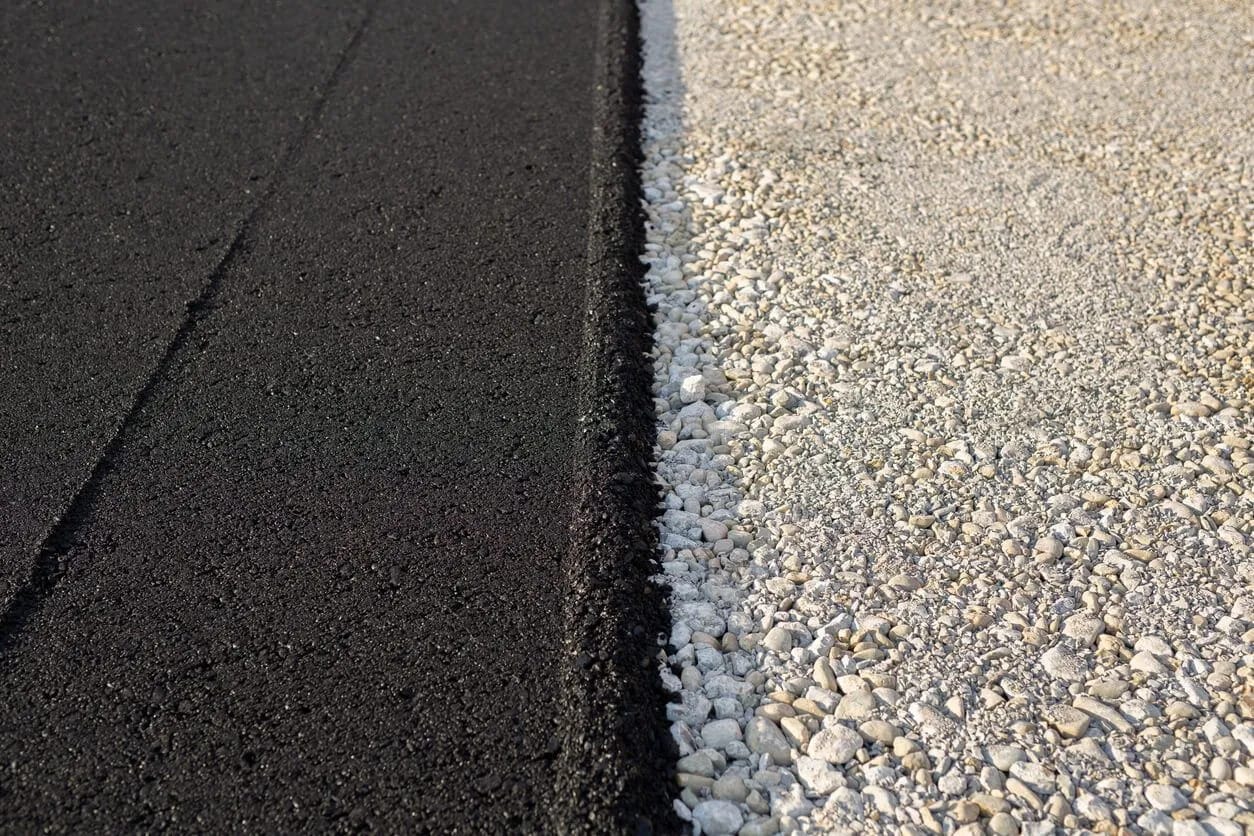
4) Edge definition and transitions. We set clean edges where the asphalt will end, sometimes with concrete, sometimes with a compacted shoulder. At tie-in points such as city streets, warehouse slabs, or existing asphalt, we mill or cut to create a smooth transition instead of a bump that breaks down.
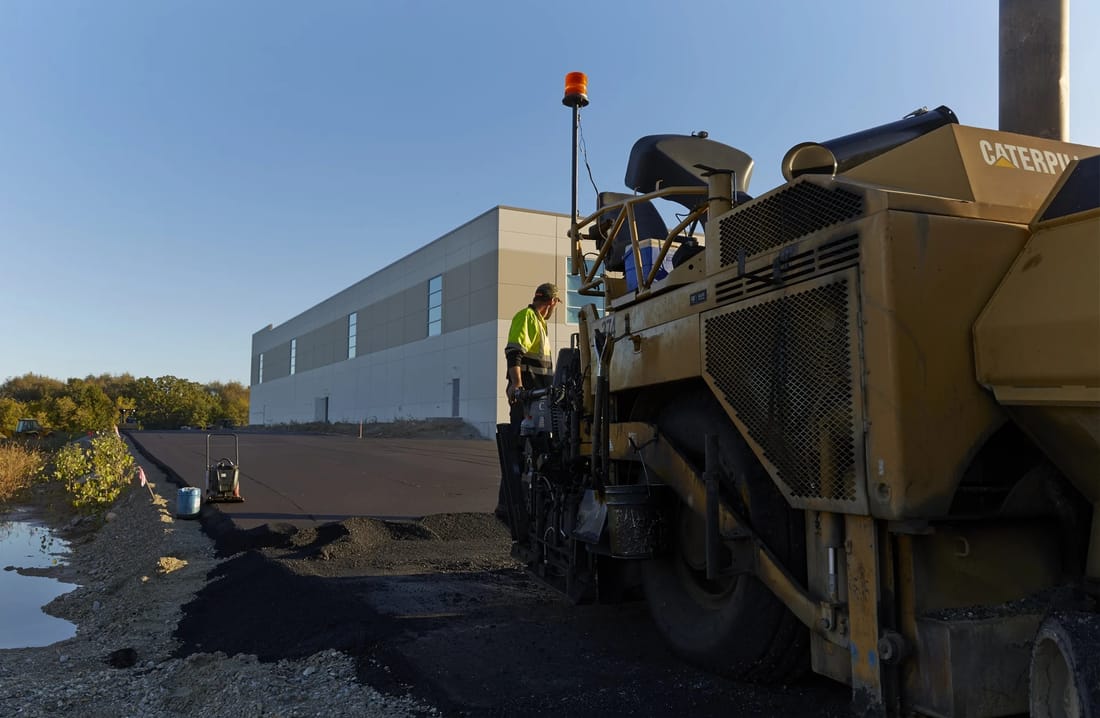
5) Asphalt paving and rolling. For most commercial lots, we place a base course of asphalt, then a finer surface course. Material is placed with a paver for consistency, then compacted with steel and pneumatic rollers so you get a dense, tight mat that resists Houston heat and traffic.
6) Line striping and finishing touches. After the asphalt cools, we stripe parking stalls, fire lanes, ADA spaces, and loading zones. If needed, we install wheel stops, signage, and traffic control markings so the lot functions the way your business needs it to.
What Drives Cost on a Commercial Gravel-to-Asphalt Conversion
Commercial gravel to asphalt pricing is largely driven by what we find under your current surface. Precision Asphalt Houston breaks costs down so you understand where the money goes and what is optional versus required.
Base condition is the biggest factor. If your gravel lot was built over native clay with little compaction, we may need to undercut and rebuild sections with stabilized base material. This is more expensive up front, but it prevents early failure that would cost far more to fix later.
Pavement thickness matters too. Light-duty employee parking may only need 3 to 4 inches of asphalt. Areas with delivery trucks, container storage, or forklifts often need 5 to 7 inches or a combination of thick asphalt and a stronger base. We match thickness to your heaviest, most frequent loads, not just average car traffic.
Drainage improvements can also affect cost. Adding or adjusting culverts, inlets, and swales may be needed in low-lying Houston sites where water backs up during heavy storms. In some cases, simply changing the grading solves the issue, in others we recommend specific drainage structures.
Access requirements play a role. If we have to work in tight windows so your operation never stops, or if we phase the job so half the lot remains open, production slows down and that time is reflected in the price. We always lay out options so you can decide how to balance disruption versus cost.
Finally, finishes like striping complexity, signage, and bollards can change the final number. A simple equipment yard with no striping is one price, while a marked retail parking lot with specialty markings, crosswalks, and reserved spaces is another. We separate these items on the proposal so you can see each piece clearly.
Common Problems With Old Gravel Lots and How We Fix Them
Most commercial gravel lots around Houston share a few recurring problems. Precision Asphalt Houston deals with these during the conversion so they do not keep coming back under the new asphalt.
Soft clay and pumping areas. Houston clay expands when wet and contracts when dry. On gravel lots, that shows up as squishy, pumping areas where trucks sink after rain. We cut those sections out, stabilize or replace the subgrade with select fill or cement-treated material, then rebuild the base before paving.
Ruts and wheel paths. Heavy trucks follow the same lines, which creates deep ruts in gravel. When converting to asphalt, we do not just fill them in. We regrade and compact the whole surface so the asphalt thickness is consistent. This prevents those ruts from telegraphing back through the new pavement.
Dust and washouts. Unbound gravel creates dust in dry weather and washes out when it rains. By converting to a bound asphalt surface over a compacted base, you eliminate most dust issues around loading docks and buildings, and reduce washouts at entrances that currently need constant regrading.
Poor access during storms. Gravel drive lanes and loading zones often become muddy and uneven during heavy rain, which is common in our area. With proper slopes and a tied-in asphalt surface, trucks can keep moving even when the rain hits. We pay special attention to dock approaches and dumpster areas, since these see constant turning and backing.
Patchwork repairs. Some properties have years of spot fixes, extra rock added to low spots, and makeshift drainage. During a conversion, we strip this patchwork approach and give the site one consistent, engineered surface, which reduces maintenance calls and tenant complaints long term.
Planning, Scheduling, and What to Expect in Houston Weather
Houston weather is hot and humid, and that affects how and when commercial gravel to asphalt conversions should be done. Precision Asphalt Houston typically recommends scheduling large conversions in the drier parts of the year, such as late spring or early fall, to reduce weather delays and help the base stay stable during construction.
That said, asphalt can be installed throughout most of the year here as long as the base is not saturated. Before work starts, we watch the forecast and coordinate with you on timing so that we are not excavating or paving right before a major storm. If heavy rain does move in, we secure the site so your operations stay as functional as possible until we can resume.
On an active commercial site, we usually break the project into phases. For example, we may convert one half of the lot while you park or stage on the other half, then swap sides. For truck yards, we can create temporary access lanes and loading zones so you do not have to shut down. We lay all of this out ahead of time so there are no surprises.
During the work itself, you can expect some noise from compactors and trucks, plus temporary changes to traffic flow. We handle barricades and basic traffic control within the site so employees and visitors know where to go. At the end of each workday, we leave the site in a safe, usable condition.
After paving, the asphalt typically needs a short cooling period before full traffic. For most commercial lots, light vehicle traffic can return the next day, with heavier truck traffic following our specific guidance based on thickness and weather. We walk the finished site with you, review drainage and striping, and provide maintenance tips so you get maximum life out of your new asphalt surface.