Home › Industrial and Heavy-Duty Asphalt Paving
Handle heavy loads with confidence using industrial asphalt paving in Houston, TX. We design and build pavements for truck yards, loading docks, plants, and storage facilities with the right base, mix design, and thickness for demanding traffic.
Precision Asphalt Houston provides professional industrial asphalt paving throughout Houston, TX, Texas and the surrounding area. Our licensed, insured crew delivers safe, clean, on-time work with a free estimate before anything begins. Call (346) 523-8307 or request your free quote.
Industrial Asphalt Paving Built for Houston Workloads
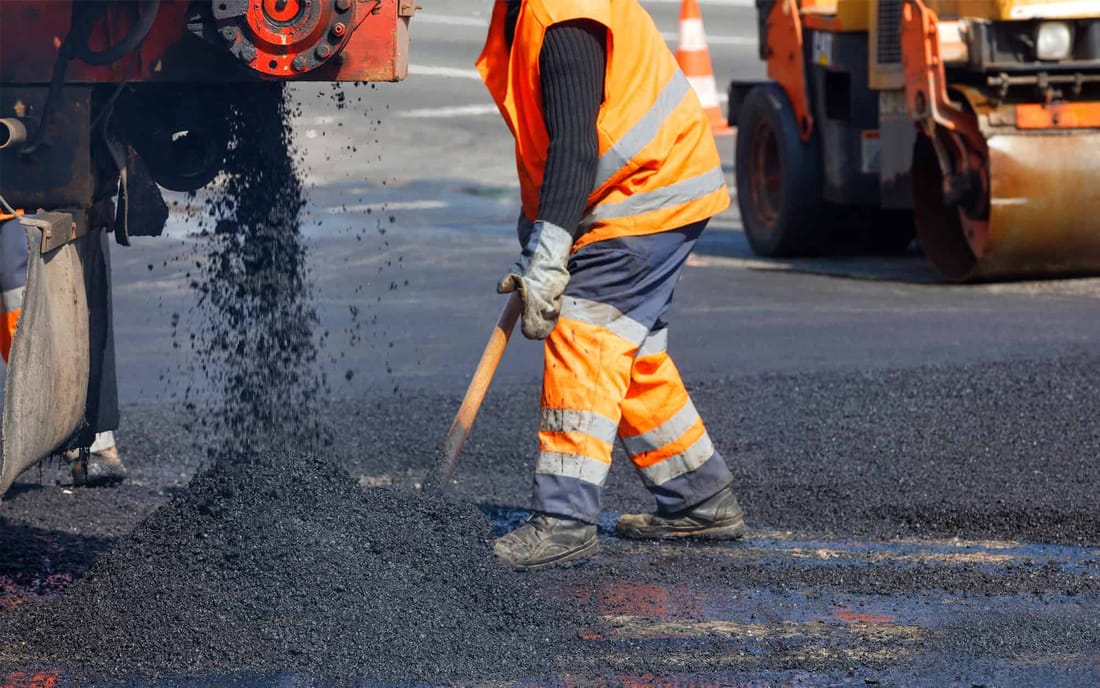
Industrial asphalt paving is not about making a driveway look nice. It is about building a surface that can take constant pounding from loaded trucks, forklifts, containers, and heavy equipment without breaking up. At Precision Asphalt Houston, our crews design and install asphalt pavements specifically for industrial yards, plants, and distribution centers around Houston, Texas.
Most of our industrial customers call because they are seeing rutting in truck lanes, alligator cracking where trailers park, or standing water around loading docks. Houston heat, afternoon thunderstorms, and clay soils make these problems worse if the pavement was not designed for heavy duty use. We start every project by walking the site with you, noting traffic patterns, turning areas, drainage paths, and any existing failures. We also look at what is stored or handled on site, such as chemicals or fuel, because that affects the mix design and protection needed.
Instead of guessing at pavement thickness, we match the design to your real traffic. A yard with a few weekly deliveries needs a different section than a 24/7 distribution hub with triple-axle trucks. We discuss your operations, current issues, and future expansion so you are not rebuilding in a few years. The goal is simple: an industrial pavement that holds up in Houston weather and under your actual loads, with minimal disruption to your business while we build it.
How Heavy-Duty Asphalt Paving Is Actually Built
Industrial asphalt paving starts from the bottom up. In Houston, the native soils are often expansive clays that hold water and move with moisture changes. If we ignore that, your pavement will crack and settle, no matter how good the asphalt mix is. Precision Asphalt Houston begins by stripping soft topsoil and failed pavement, then evaluating the subgrade. Where the soil is weak, we stabilize it using lime or cement, or we install a thicker crushed stone base to spread the load.
Next is the base course. For heavy-duty applications, we typically use 6 to 12 inches of compacted crushed limestone or recycled concrete, depending on your site and budget. Each lift is compacted with vibratory rollers to meet density targets. We often proof-roll the base with a loaded truck, which means we drive a heavy truck on the new base and watch for deflection or pumping. Any soft spots are cut out and rebuilt before asphalt goes down.
For industrial yards and truck courts, the asphalt surface itself is usually placed in multiple layers. A common design for a busy trucking facility might be a 3 to 4 inch base asphalt course with a 1.5 to 2 inch surface course. Areas where trucks turn sharply or brake hard, like entrances and dock approaches, may get an extra inch of asphalt or a stronger mix. We use heavy-duty commercial mixes with more stone and modified binders where needed, which helps resist rutting in Houston summer heat.
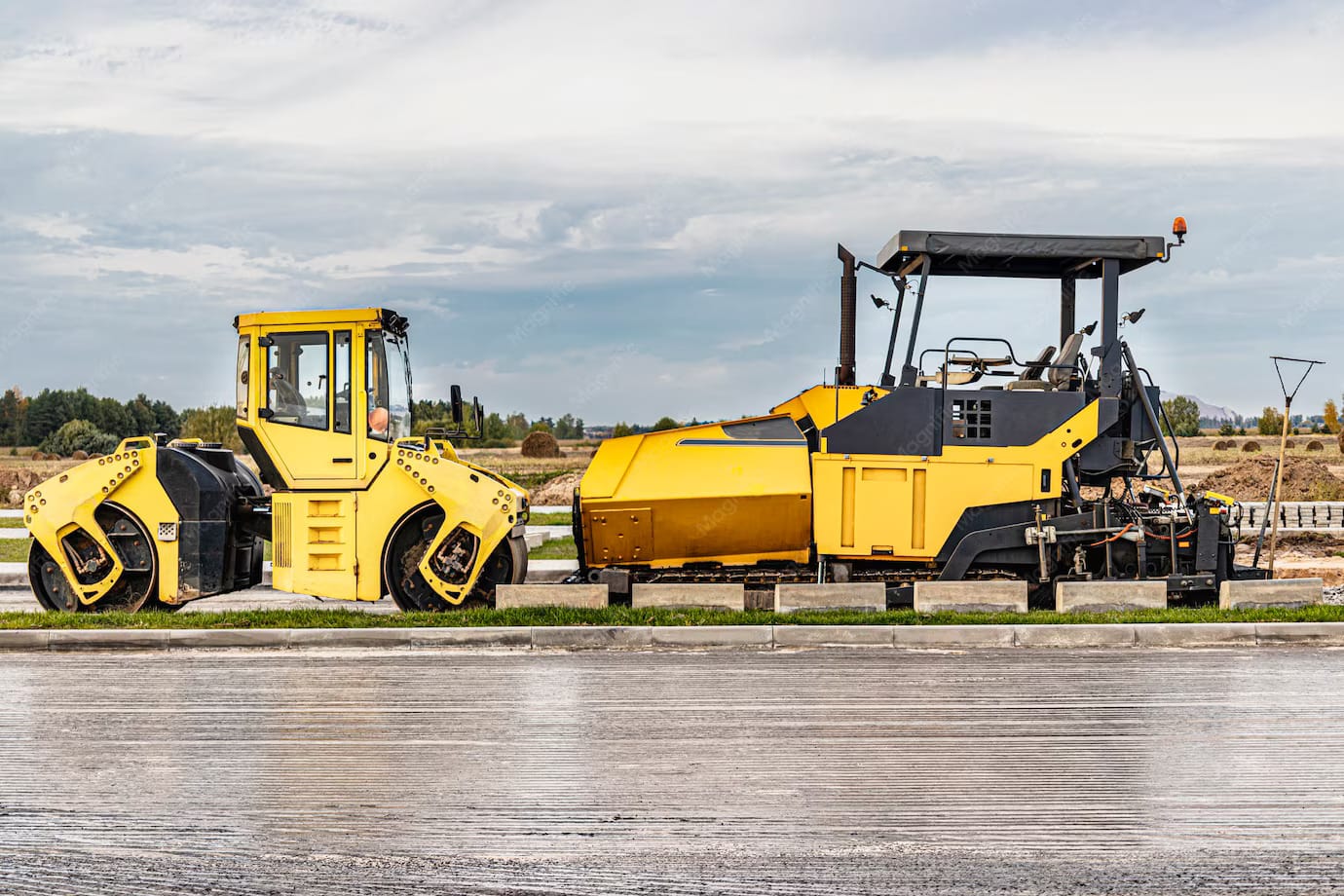
Paving is performed with commercial pavers for smooth, even mat thickness. Steel drum and pneumatic rollers follow specific rolling patterns while the asphalt is still at the right temperature, which locks aggregate together and squeezes out air voids. We control joint locations, keep them away from wheel paths where possible, and hot-tack between layers so the pavement acts as one solid structure. On industrial jobs, quality control is about bearing capacity and compaction, not just appearance.
Design Choices, Mix Options, and What Drives the Cost
Two industrial yards can look similar but cost very different amounts. The main drivers of cost are pavement thickness, base preparation, mix type, drainage needs, phasing around operations, and site access. Precision Asphalt Houston walks you through these choices so you understand where your money goes and where you can or cannot cut back.
Thickness and base prep are the big items. Deeper base rock and asphalt cost more, but they are what stop rutting and structural failure under heavy wheel loads. If you plan to run loaded 18-wheelers daily or store containers for long periods, we will recommend a heavier pavement design. When budgets are tight, we sometimes adjust by increasing base thickness and using a more economical surface mix in low-stress areas, keeping the strongest design in the main truck lanes.
Mix selection matters, especially in Houston heat. Standard parking lot mixes tend to rut when subjected to constant truck traffic and high pavement temperatures. For industrial asphalt paving, we often propose a higher stone content mix or polymer-modified asphalt in wheel paths. It costs more per ton, but it reduces shoving and ruts, which saves on future repairs. Where fuels or oils are routinely spilled, we may suggest protective surface treatments or alternative paving in those small zones, while keeping asphalt in the rest of the yard.
Drainage design is another cost factor. Houston storms drop heavy rain in short periods, and standing water shortens pavement life. We check grades, set proper slopes, and design transitions to existing buildings and drains. Sometimes we need additional inlets, trench drains at dock doors, or regrading to move water away from slab edges. Fixing drainage now is cheaper than rebuilding failed sections later. Access limitations, such as tight sites, working around existing operations, or night work requirements, can also affect price, since they change how we bring in equipment and how fast we can pave.
Common Industrial Pavement Problems in Houston and How We Address Them
Most industrial customers in Houston call Precision Asphalt Houston after they see specific problems. Understanding what causes them helps you choose the right solution instead of just patching the surface.
Rutting and depressions in truck lanes usually show up where asphalt is too thin or the underlying base is weak. We test suspicious areas with coring or by cutting small sections so we can see the layer thicknesses and condition. If only the top layer is deformed, we may mill out a few inches and replace it with a stronger mix. If the rutting goes down into the base, we excavate deeper, rebuild the base, and then repave. That costs more, but it is the only way to stop the same spot from failing again.
Alligator or fatigue cracking often means the pavement is overloaded compared to its design. In many older facilities, the original pavement was built for light warehouse traffic and later converted to truck or container use. Thin overlays on these cracked areas rarely last. We usually recommend full-depth repair in the worst zones, where we remove and replace all layers to a stronger industrial standard. Surrounding areas may be stabilized with mill and overlay, which controls costs while improving performance.
Drainage failure is another big issue in our climate. Water pooling in wheel paths, along building edges, or near dock doors accelerates damage. In some cases, regrading and a new surface course with proper slope solves the issue. In others, we add or relocate inlets, or install trench drains to intercept water. Houston clay soils make this more important, since trapped water can soften the subgrade and cause settlement.
We also plan around your operations. For active plants and distribution centers, we often phase work so you always have access to docks or critical drive lanes. This can involve night or weekend paving, temporary traffic control, and clearly marked cure times before heavy equipment returns. The goal is to correct underlying causes while keeping your business moving.
Planning Your Project and Working With Precision Asphalt Houston
Industrial asphalt paving projects affect how your facility runs, so planning matters. Precision Asphalt Houston begins with a site evaluation in Houston or the surrounding area, where we measure existing pavement, note grades, check drainage, and talk through your truck counts, heaviest loads, and operational constraints. Based on that, we outline pavement sections for different zones, such as main truck routes, trailer storage, light vehicle parking, and dock approaches.
We then develop a written scope that breaks the project into phases, which is especially important for 24/7 facilities. This may include temporary traffic patterns, staging areas for materials, and windows when certain docks will be out of service. Clear communication helps your team schedule deliveries and plant operations with minimal disruption. We also discuss timing around Houston weather, since large industrial paving sections are best done when we have a reliable forecast and proper temperatures for compaction.
Before final pricing, we talk frankly about budget expectations. If the ideal design is beyond the current budget, we look at phasing the work or prioritizing high-stress areas first. For example, we might rebuild main truck lanes and dock aprons now, then schedule lower-load storage areas for a later phase. We explain what each compromise means in terms of long-term performance so you can make informed decisions.
Once work starts, our crews handle site preparation, traffic control, base installation, paving, and line striping or markings if needed. At the end of the job, we walk the site with you, review drainage paths, pavement thicknesses, and any maintenance recommendations. For heavy-duty industrial pavements in Houston, routine inspections and targeted maintenance, such as joint sealing and localized patching, can extend service life significantly. Our goal is to leave you with an industrial asphalt surface that performs under your loads, in your climate, and fits how your facility actually operates.